Best Materials for Coastal Homes Fort Myers Beach
Updated: May 1
Building for Salt, Storms, and Long-Term Performance
Coastal home construction in Fort Myers Beach is fundamentally different from inland residential building. Material selection is not just about aesthetics or cost, it is a critical engineering decision that directly impacts durability, maintenance, hurricane resistance, and long-term property value.
Homes built on Estero Island and surrounding waterfront areas are exposed to a unique combination of environmental stressors:
Salt air corrosion
High humidity and moisture intrusion
Hurricane-force winds (150+ MPH design loads)
Storm surge and flooding (AE and VE flood zones)
UV exposure and extreme heat
Because of this, the best materials for coastal homes in Fort Myers Beach must perform as part of an integrated system, working alongside structural engineering, elevation design, and FEMA compliance requirements.
For a complete breakdown of how materials, flood zones, elevation systems, and construction methods work together, see our Fort Myers Beach custom home builder & coastal construction guide.
If you're planning a waterfront home in Fort Myers Beach, it’s important to understand how material selection connects to the full construction process, including flood zones, structural design, and overall cost.
Start with these in-depth Fort Myers Beach construction guides:
Each guide breaks down a critical part of building in a high-risk coastal environment like Estero Island.
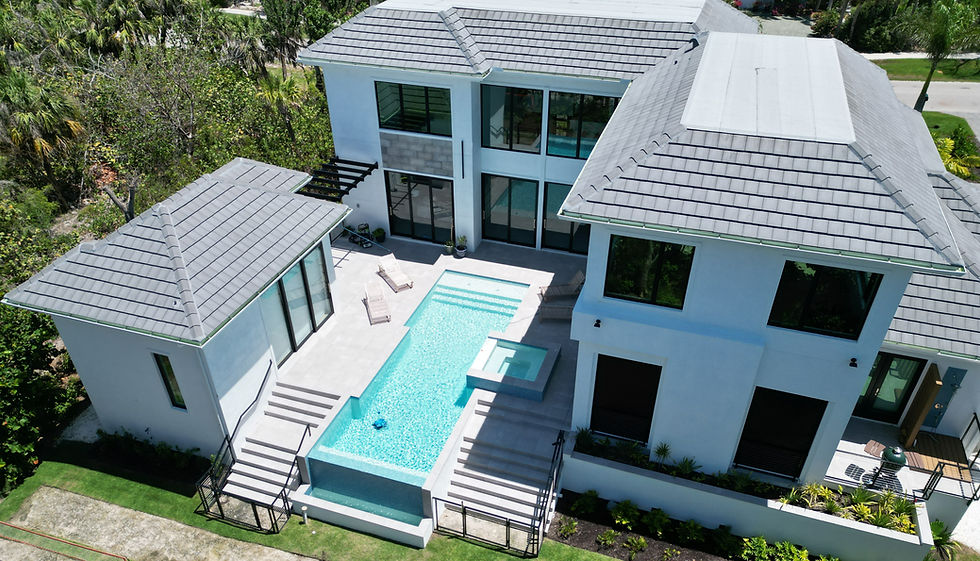
Why Material Selection Matters More in Fort Myers Beach Than Anywhere Else
Material selection is just one part of building a high-performance coastal home. For a full breakdown of how design, engineering, and construction systems integrate, see our Fort Myers Beach custom home builder & coastal construction guide.
In most residential markets, materials are chosen based on:
Style
Budget
Maintenance preferences
In Fort Myers Beach, materials are chosen based on:
Corrosion resistance
Wind-load performance
Moisture durability
Flood survivability
Long-term lifecycle cost
This shift is driven by FEMA flood regulations and barrier island conditions in Lee County, where even minor material failures can lead to major structural issues.
Key Reality:
In coastal construction, material failure is not cosmetic, it’s structural and financial.
Top Exterior Materials for Coastal Homes
1. Fiber Cement Siding (One of the Most Reliable Coastal Claddings)
Fiber cement siding is one of the most widely used exterior materials in Fort Myers Beach due to its resistance to moisture, pests, and salt air. Material selection is also heavily influenced by architectural style and elevation strategy. For a deeper look at how these materials integrate into modern coastal design, see our waterfront home design trends in Fort Myers Beach.
Why it works:
Non-combustible and highly durable
Resistant to warping, rot, and insects
Performs well in humid coastal climates
Holds paint better than wood
Best use cases:
Elevated coastal homes in AE zones
Modern and transitional coastal architecture
Homes requiring long-term low maintenance
Compared to wood siding:
Far less maintenance
No rot or termite risk
Better long-term cost efficiency
2. Reinforced Concrete and Concrete Block Construction
Concrete remains one of the most structurally reliable materials for coastal homes.
Applications:
Structural walls (CMU block)
Elevated foundation systems
Pool decks and terraces
Advantages:
High wind resistance
Excellent durability in storm conditions
Resistant to moisture and flooding
Long lifespan with minimal degradation
In VE zones, concrete often works in conjunction with deep pile foundations to create a stable structural system.
3. Impact-Resistant Windows and Doors (Hurricane-Rated Glass Systems)
One of the most critical material decisions in any Fort Myers Beach home is the window and door system. Impact-rated glass systems are not just a material upgrade, they are part of a larger hurricane engineering strategy. To understand how these systems integrate with structural design, see our design-build vs traditional construction in Fort Myers Beach guide.
Features:
Laminated impact glass
Reinforced aluminum or composite frames
Tested for hurricane debris impact
Benefits:
Eliminates need for shutters in many cases
Protects building envelope during storms
Reduces insurance risk
Improves energy efficiency
These systems must integrate with the home’s structural load path, especially in VE zones.
4. Metal Roofing Systems (Preferred Coastal Roofing Material)
Metal roofing is widely considered the best roofing material for coastal environments. Roof system selection also plays a major role in overall construction cost, especially in high-wind coastal zones. For a full breakdown of cost factors, see our cost to build a custom home in Fort Myers Beach guide.
Why it outperforms shingles:
Resistant to wind uplift
Reflects heat (energy efficiency)
Long lifespan (40–70 years)
Minimal maintenance
Common types:
Standing seam metal roofs
Aluminum roofing (preferred near saltwater)
Key advantage:Metal roofing performs significantly better than asphalt shingles in hurricane conditions.
5. Marine-Grade Exterior Hardware and Fasteners
One of the most overlooked, but critical, material categories is hardware.
Problem:Standard steel hardware corrodes rapidly in salt air environments.
Solution:
Marine-grade stainless steel (316 grade preferred)
Corrosion-resistant fasteners
Powder-coated or anodized finishes
Where it matters:
Railings
Hinges
Structural connectors
Outdoor fixtures
Failure to use proper hardware can lead to premature system failure, even if major materials are high quality.
Best Materials for Coastal Interiors
Interior materials in Fort Myers Beach homes must handle:
Humidity
Potential water exposure
Temperature fluctuations
1. Porcelain Tile Flooring (Top Coastal Flooring Choice)
Porcelain tile is the most durable and water-resistant flooring option.
Benefits:
Completely waterproof
Resistant to salt and humidity
Scratch-resistant
Low maintenance
Best applications:
Main living areas
Kitchens
Bathrooms
Ground-level spaces
2. Engineered Hardwood (Used Carefully in Elevated Living Spaces)
While solid hardwood is risky in coastal environments, engineered wood can perform well when properly installed.
Advantages:
More stable than solid wood
Better resistance to humidity changes
Maintains luxury aesthetic
Best use:
Upper-level living areas above flood elevation
3. Quartz Countertops (Moisture-Resistant and Durable)
Quartz is ideal for coastal kitchens and bathrooms.
Why it works:
Non-porous (resists moisture and staining)
Low maintenance
Durable in humid conditions
4. Moisture-Resistant Drywall and Insulation
Standard drywall can fail quickly in humid environments.
Better options:
Moisture-resistant drywall (green board)
Closed-cell spray foam insulation
Benefits:
Reduces mold risk
Improves energy efficiency
Enhances indoor air quality
Outdoor Living Materials (Critical in Waterfront Homes)
Outdoor spaces are a major part of Fort Myers Beach homes, but they require specialized materials.
1. Composite Decking (Alternative to Wood)
Traditional wood decking deteriorates quickly in coastal environments.
Composite decking advantages:
Resistant to moisture and rot
Low maintenance
Long lifespan
UV-resistant
2. Natural Stone and Porcelain Pavers
Used for:
Pool decks
Walkways
Outdoor patios
Why they work:
Durable under heavy sun exposure
Resistant to water and salt
Slip-resistant options available
3. Aluminum Railings and Structural Elements
Wood railings degrade quickly in coastal conditions.
Aluminum benefits:
Corrosion-resistant
Lightweight and strong
Minimal maintenance
How Flood Zones Influence Material Selection
Material selection is heavily influenced by FEMA flood zone classifications.
AE Zones (Moderate Flood Risk)
More flexibility in material use
Elevated slab or stem wall systems
Interior materials still require moisture resistance
VE Zones (High-Risk Coastal Areas)
Materials must withstand wave action
Open lower levels (non-habitable)
Breakaway wall systems required
Structural materials must resist erosion and uplift
In VE zones, materials are selected not just for durability, but for how they fail safely under extreme conditions.
These requirements are based on FEMA floodplain management standards, which dictate elevation, structural design, and material performance in coastal environments. For a detailed breakdown of how AE and VE flood zones impact materials, elevation, and structural systems, see our Fort Myers Beach flood zones explained (AE vs VE) guide.
Material Mistakes to Avoid in Fort Myers Beach
Even high-end homes fail when materials are selected incorrectly.
Common mistakes:
1. Using standard steel hardware→ Leads to rapid corrosion
2. Installing traditional wood siding→ Warping, rot, and high maintenance
3. Choosing low-grade windows→ Failure during storms
4. Ignoring moisture resistance indoors→ Mold and long-term damage
5. Over-prioritizing aesthetics over performance→ Expensive repairs within years
Real-World Example: Material Selection in a Fort Myers Beach Waterfront Home
In a recent waterfront custom home project on Fort Myers Beach, material selection was driven entirely by VE flood zone requirements, salt exposure, and long-term maintenance considerations.
Project Overview:
• Location: Estero Island waterfront lot
• Flood Zone: VE (high-velocity wave zone)
• Foundation: 30+ ft deep pile system with elevated structural platform
• Living Elevation: 14+ feet above grade
Material Strategy:
• Exterior: Fiber cement siding with marine-grade coatings
• Structure: Reinforced concrete and CMU block system
• Windows/Doors: Impact-rated hurricane glass with aluminum frames
• Roofing: Standing seam aluminum metal roof
• Hardware: 316 marine-grade stainless steel throughout
Result:
• Passed FEMA and Lee County permitting without revisions
• Reduced long-term maintenance exposure
• Improved insurance positioning
• Delivered a high-end coastal aesthetic without sacrificing durability
This type of integrated material strategy is critical in Fort Myers Beach, where environmental exposure and regulatory requirements directly impact every construction decision. Projects like this highlight why an integrated design-build approach is essential in Fort Myers Beach. Learn more in our design-build vs traditional construction in Fort Myers Beach guide.
Cost Impact of Coastal Materials
Material selection significantly affects construction cost in Fort Myers Beach.
Key cost drivers:
Impact-rated glass systems
Marine-grade materials
Elevated structural systems
High-performance roofing
Typical cost impact:
Coastal material upgrades can increase costs by 10–25%
However, they reduce:
Maintenance costs
Repair risk
Insurance exposure
Important insight:
Cheaper materials often result in higher lifetime costs in coastal environments. Material selection, elevation requirements, and structural engineering all combine to influence total project cost. For a detailed cost breakdown by home type and flood zone, see our cost to build a custom home in Fort Myers Beach guide.
Why Design-Build Matters for Material Selection
Material performance is directly tied to:
Structural engineering
Elevation systems
Hurricane resistance
This is why material selection should never happen in isolation.
In a design-build system:
Materials are selected during design
Engineering and architecture are aligned
Cost is optimized in real time
This prevents:
Redesign cycles
Material mismatches
Construction delays
For more detail, see Design-Build vs Traditional Construction in Fort Myers Beach.
How Materials Impact Long-Term Property Value
In Fort Myers Beach, buyers and insurers increasingly evaluate:
Hurricane resistance
Flood compliance
Material durability
Maintenance requirements
Homes built with high-performance coastal materials:
Maintain value longer
Sell faster
Command premium pricing
Homes built with inferior materials:
Require frequent repairs
Face insurance challenges
Lose value over time
Coastal Home Building in Fort Myers Beach, Estero Island, and Lee County
Material selection for coastal homes is not just a design decision, it is heavily influenced by local building conditions, permitting requirements, and environmental exposure specific to Fort Myers Beach and surrounding areas.
Homes on Estero Island face some of the most aggressive coastal conditions in Southwest Florida, including direct Gulf exposure, high salt air concentration, and strict FEMA flood zone enforcement. These conditions require materials that can withstand long-term corrosion, storm surge, and hurricane-force winds.
In nearby areas like San Carlos Island, Fort Myers, Bonita Springs, and Naples, material requirements may vary slightly based on flood zone classification, elevation requirements, and proximity to open water. However, all coastal construction in Lee County must meet strict structural, wind-load, and durability standards.
Because of these localized conditions, selecting the right materials is not just about product choice, it is about understanding how those materials perform within a specific coastal environment, permitting jurisdiction, and flood zone classification.
This is why working with a builder experienced in Fort Myers Beach coastal construction is critical to ensuring long-term performance, code compliance, and property value protection.
Frequently Asked Questions About Coastal Building Materials in Fort Myers Beach
What materials last the longest in coastal environments like Fort Myers Beach?
Materials such as fiber cement siding, reinforced concrete, metal roofing, and marine-grade stainless steel offer the best long-term durability due to their resistance to salt air corrosion, moisture, and hurricane conditions.
Are impact windows required in Fort Myers Beach?
In most cases, yes. Due to hurricane risk and Florida Building Code requirements, impact-rated windows and doors are standard in coastal construction and are often required for permitting and insurance compliance.
Why is metal roofing preferred for coastal homes?
Metal roofing, especially aluminum systems, provides superior wind resistance, corrosion resistance, and longevity compared to traditional asphalt shingles, making it ideal for Fort Myers Beach conditions.
What materials should be avoided in coastal homes?
Materials such as untreated wood, standard steel hardware, and low-grade windows should be avoided due to rapid deterioration in salt air and high humidity environments.
How do flood zones affect material selection?
In VE zones, materials must withstand wave action, saltwater exposure, and structural movement, requiring more durable and engineered systems compared to AE zones.
Is it worth spending more on coastal-grade materials?
Yes. While upfront costs are higher, high-performance materials significantly reduce maintenance, repair costs, and long-term structural risk, making them more cost-effective over time.
Key Takeaways: Best Materials for Coastal Homes in Fort Myers Beach
• Use fiber cement and concrete for long-term durability
• Choose impact-rated windows for hurricane protection
• Install metal roofing for superior wind resistance
• Use marine-grade hardware to prevent corrosion
• Select moisture-resistant interior materials
• Always align materials with flood zone requirements (AE vs VE)
In coastal construction, performance matters more than aesthetics, materials must be engineered for salt, storms, and long-term resilience.
Final Summary
The best materials for coastal homes in Fort Myers Beach are not chosen based on style alone, they are selected based on performance under extreme coastal conditions.
The most important material strategies include:
Fiber cement and concrete exterior systems
Impact-rated windows and doors
Metal roofing systems
Marine-grade hardware
Moisture-resistant interior materials
Durable outdoor living surfaces
In a barrier island environment like Estero Island, material selection is directly tied to:
FEMA compliance
Hurricane resilience
Long-term maintenance
Property value
Building a waterfront home in Fort Myers Beach requires more than selecting finishes, it requires a fully integrated material, engineering, and construction strategy designed for coastal performance.
DeSanctis Homes specializes in designing and building high-performance coastal homes across Fort Myers Beach, Estero Island, and Southwest Florida. Our design-build approach ensures that every material, from foundation systems to exterior finishes, is selected and engineered for durability, FEMA compliance, and long-term value.
If you're planning a custom home or waterfront rebuild, contact DeSanctis Homes to discuss your project and explore the best material and construction strategy for your property.
To fully understand how materials, design, flood zones, and construction systems work together in Fort Myers Beach, explore our core guides:
These resources provide a complete roadmap for building a high-performance coastal home in Fort Myers Beach and Estero Island.
Comments